Politics
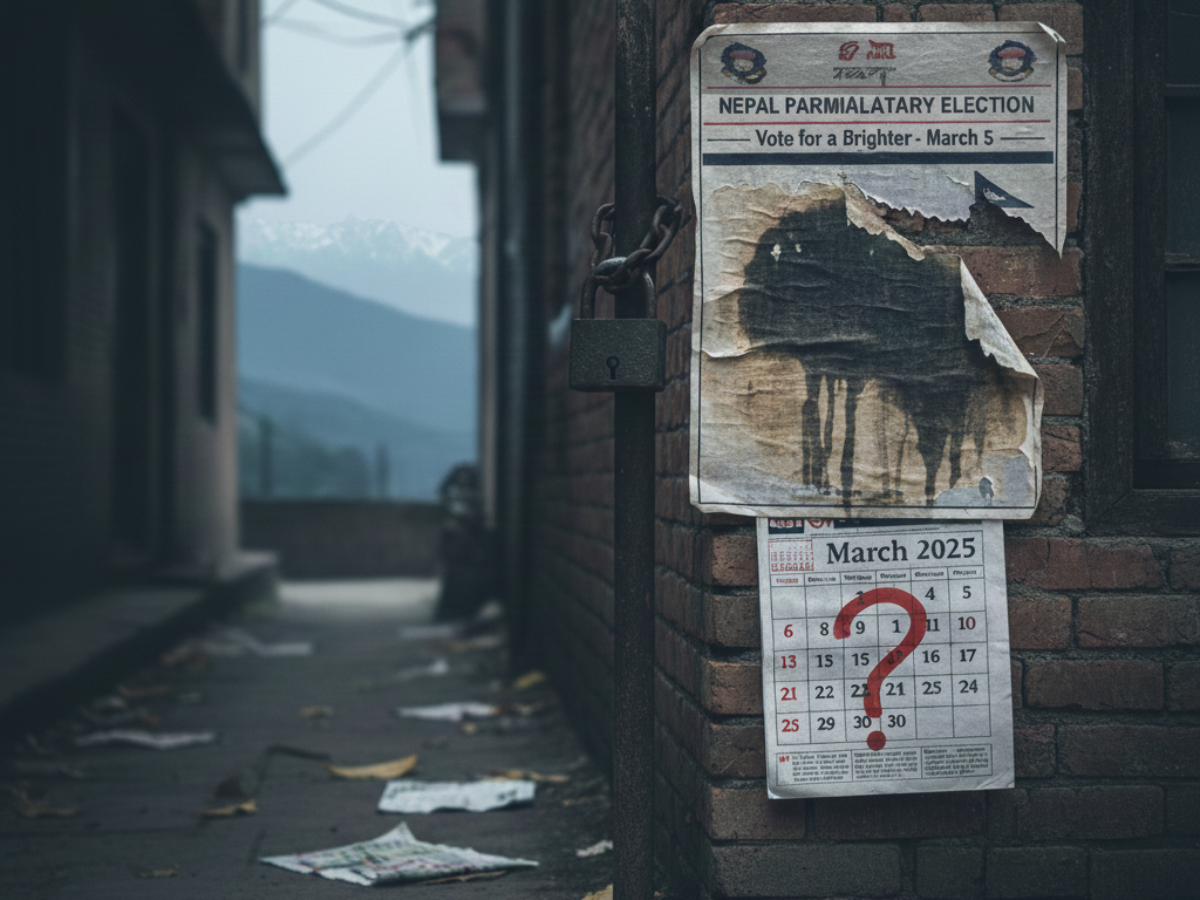
The officialdom would like us to believe that the stage is set for Nepal’s third general election since the promulgation of the 2015 Constitution. On paper, the process is moving just according to plan.
Of the 137 political parties registered with the Election Commission (EC), election symbols have been allotted to 93. Several newer parties, many born out of the Gen Z–led protests of September, have merged, fearing backlash from – to borrow the words of many Nepali intellectuals – traditional political parties. Whatever, these parties have submitted their proportional representation (PR) lists, from which 110 members will eventually make it to the 275-member House of Representatives.
Both newly created or "modern" and "traditional" or otherwise mainstream political parties are frantically engaged in finalising their candidates for the 165 seats elected under first-past-the-post (FPTP) in the run-up to the January 20 deadline to file nomination papers. Polling centres have been finalized. The election Code of Conduct is ready and the Election Commission is expected to enforce it shortly. Close to 150,000 temporary security personnel will soon be recruited for the election purpose.
The stand-off between the interim government and the "traditional" political parties has been addressed, and the latter have expressed their ready willingness to participate in the elections. Such a gesture, or commitment, from the political parties has naturally made the government upbeat about the elections being held on time. Political leaders periodically reiterate the January 20 deadline for filing nomination papers for the 165 first-past-the-post (FPTP) seats. Party headquarters, meanwhile, are receiving names of potential candidates from their local units.
Up to this point, the election appears to be on schedule.
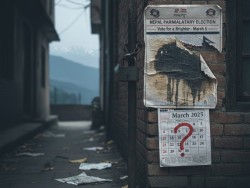
Yet few are willing to say with confidence that polling will indeed take place on March 5. An estimated one million new voters – mostly newly registered Gen Z and first-time voters – appear more into politics than in previous election cycles. The seasoned voters and established political parties sound more sceptical about the likelihood of elections being held on time.
Nearly half the country lies beyond the Churia Hills, stretching into high mountains where severe cold persists through March and early April. One option would be to hold polls in at least two phases, with a second round pushed to May. This is a political decision that the interim government will have to take. But any move by the interim government to that end is likely to meet resistance from the "traditional" parties as they appear ill-prepared to face voters so soon after the Gen Z protests.
Political heavyweights, including the Nepali Congress and the CPN-UML, have knocked on the Court doors, challenging what they term as the unconstitutional dissolution of the House of Representatives by the interim government. Petitions seeking the reinstatement of the dissolved House await a crucial verdict in a country vertically divided along political lines. Younger voters, particularly those who were in the frontlines of Gen Z protests, remain vehemently opposed to the NC-UML demand.
The Supreme Court finds itself in no less a tricky situation. In recent years, it overturned former prime minister KP Sharma Oli’s twin moves to dissolve the House, citing the constitutional clause that gives no right to prime minister to dissolve the House. If the Court were to examine the present dissolution strictly by the letter of the Constitution, it will once again be compelled to reinstate the House. If, however, it factors in the circumstances under which the interim government was formed, it may be inclined to uphold the dissolution. This would be welcomed by Gen Z, first-time voters and younger citizens who see fresh elections as the only credible way forward.
There is, at least rhetorically, a broad consensus across the political spectrum that the country needs elections. But the prevailing mood tells a different story: Despite the ticking calendar and the procedural readiness, the public at large does not seem to feel an election in the air, much the way they did in the past – if off-the-cuff responses from Kathmandu residents are any indication to go by. Yet they wish the elections were held on time.